
Interior and kitchen lighting
Lighting is the electrical work people actually experience. A house can be perfectly safe and still be miserable to live in because every room has one pendant in the middle of the ceiling.
- Downlights — spaced for the room rather than in a grid, and rated correctly for bathrooms and insulated ceilings
- Kitchen lighting — task light where you actually chop, under-cabinet lighting, and separate switching so you're not lighting the whole room to make tea
- Concealed and cove lighting — LED strip in wardrobes, shelving and dressing rooms, which is one of the most transformative things you can do to a room for the money
- Bathroom lighting and extraction — correctly zoned, correctly rated, and vented properly rather than into the loft
- Replacement fittings — including the awkward ones on high ceilings and stairwells
Why your dimmers buzz
This is the single most common lighting complaint we get called out for, and it is almost always the same story: LED lamps fitted to a dimmer designed for filament bulbs.
An old rotary dimmer expects a resistive load of a few hundred watts. Five LED downlights might draw twenty. The dimmer is operating far below its minimum load, so it buzzes, flickers, refuses to go low, or kills lamps early.
The fix is a trailing-edge dimmer matched to the lamps, and lamps from one batch and one manufacturer. Mixing brands in the same circuit is the other common cause, and no dimmer will fix it.
Garden and security lighting
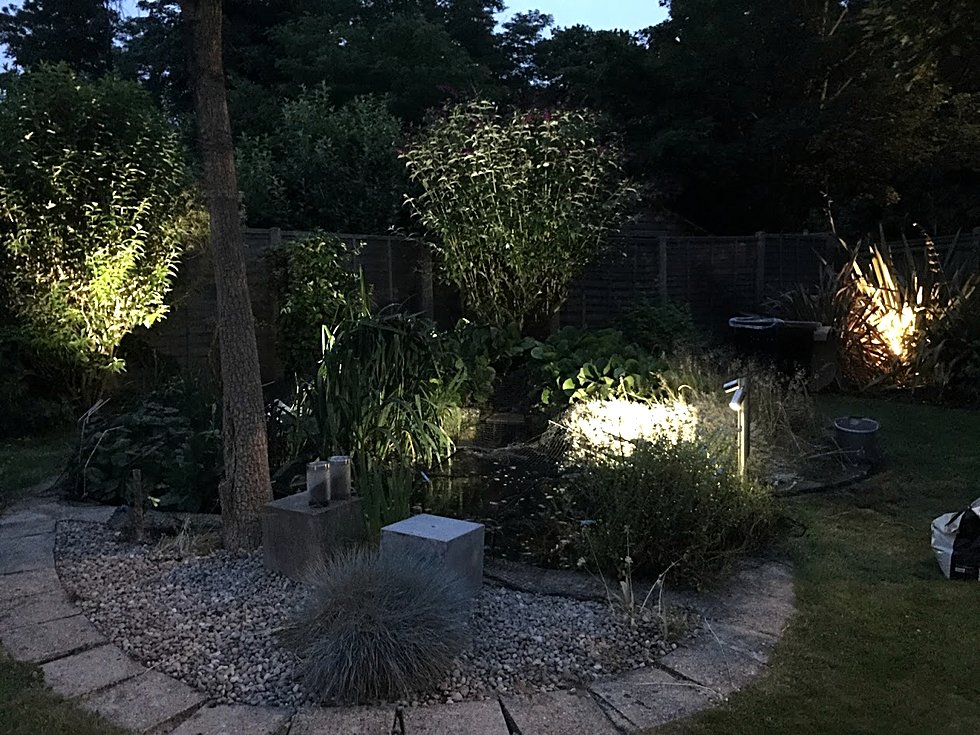
Outside lighting has a different set of problems: weather, cable routes, and the fact that badly aimed light annoys your neighbours more than it deters anyone.
- Coach lanterns, wall lights and entrance lighting, wired properly rather than spurred off a socket
- Garden and patio lighting, including the fiddly retrofits through established planting
- PIR and security lighting, aimed to cover the approach rather than the whole street
- Supplies to sheds, garages and garden offices — see outdoor power
Outdoor work is mucky and time-consuming, and it is the sort of job some electricians quietly avoid. We do not.
Common questions
Can you fit lights I've bought myself?
Yes, and plenty of customers do. We'll flag anything that looks unsuitable for where it's going before fitting it, particularly in bathrooms.
Why do my LED downlights flicker?
Almost always a dimmer intended for filament lamps, or lamps from different batches on the same circuit. Both are fixable, and neither needs the wiring changing.
Do downlights need fire hoods?
It depends on the fitting and the ceiling construction. Many modern fire-rated downlights don't need a separate hood; older ones do. We'll tell you what applies.
Can you add lights without lifting the whole floor?
Usually, yes. There's normally a route. If there genuinely isn't we'll tell you what it would take rather than making a mess finding out.
Is bathroom lighting different?
Yes. Bathrooms are zoned and fittings need an appropriate IP rating for the zone they're in. It's one of the areas where DIY installations most often fail an inspection.
Can you do lighting as part of a rewire?
Yes, and it's much the best time. Deciding lighting at first fix costs a fraction of adding it afterwards.